
Ostrog Monastery history: from hermits to a community
Ostrog Monastery history centres on the religious community that developed in the seventeenth century. The monastery's account describes caves used by the hermit Isaija and his companions at the beginning of that century, followed by a community formed with the blessing of Basil. The older fortified place called Ostrog belongs to the history of the name; it should be distinguished from the foundation of the monastery seen today.
This distinction makes the setting easier to understand. The cliff was a place associated with religious retreat before the later community took shape. Looking at the buildings as a single construction from a single founding moment misses that development. Read the caves, the churches and the story of the community together, with Basil's role as bishop and renewer at the centre.
For the arrangement of the churches and terraces, see the upper and lower monastery. The Ostrog overview puts this history alongside the practical choices for a visit.
Saint Basil of Ostrog
The monastery's life of Saint Basil gives his secular name as Stojan Jovanović and his place of origin as Mrkonjići in Popovo Polje. It connects his religious life with Zavala and Tvrdoš before his work at Ostrog. These places provide the biographical framework for understanding him as a church figure, rather than simply the person whose name is attached to a monument.
According to that church biography, he was consecrated bishop on 19 August 1638. His role at Ostrog is described through the renewal of the community. The important historical thread for a visitor is the relationship between the bishop, the existing religious setting and the monastery's development; a precise date for every stage is less useful than keeping those different parts of the story clear.
A monastery visit with a guide
A licensed English-speaking guide accompanies this monastery trip.
Hand-picked tours, booked through GetYourGuide. Prices are indicative starting prices in euros (as of October 2026). Tap a tour for live availability and the current price in your currency.
A guided route through Montenegro's monasteries
A seven-hour private monastery outing includes an English-speaking licensed guide, transport and the listed monastery and tourist taxes.
The cliff churches and the shape of the monastery
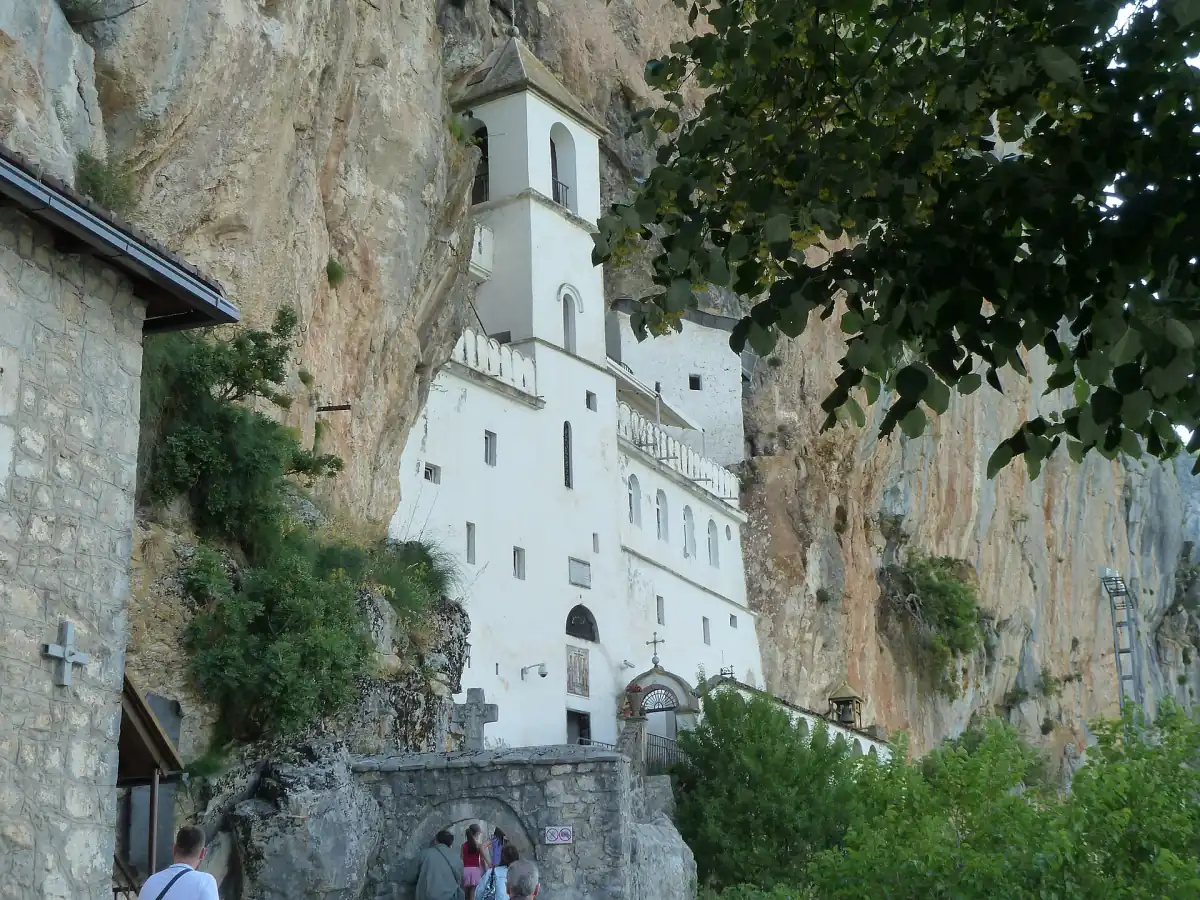
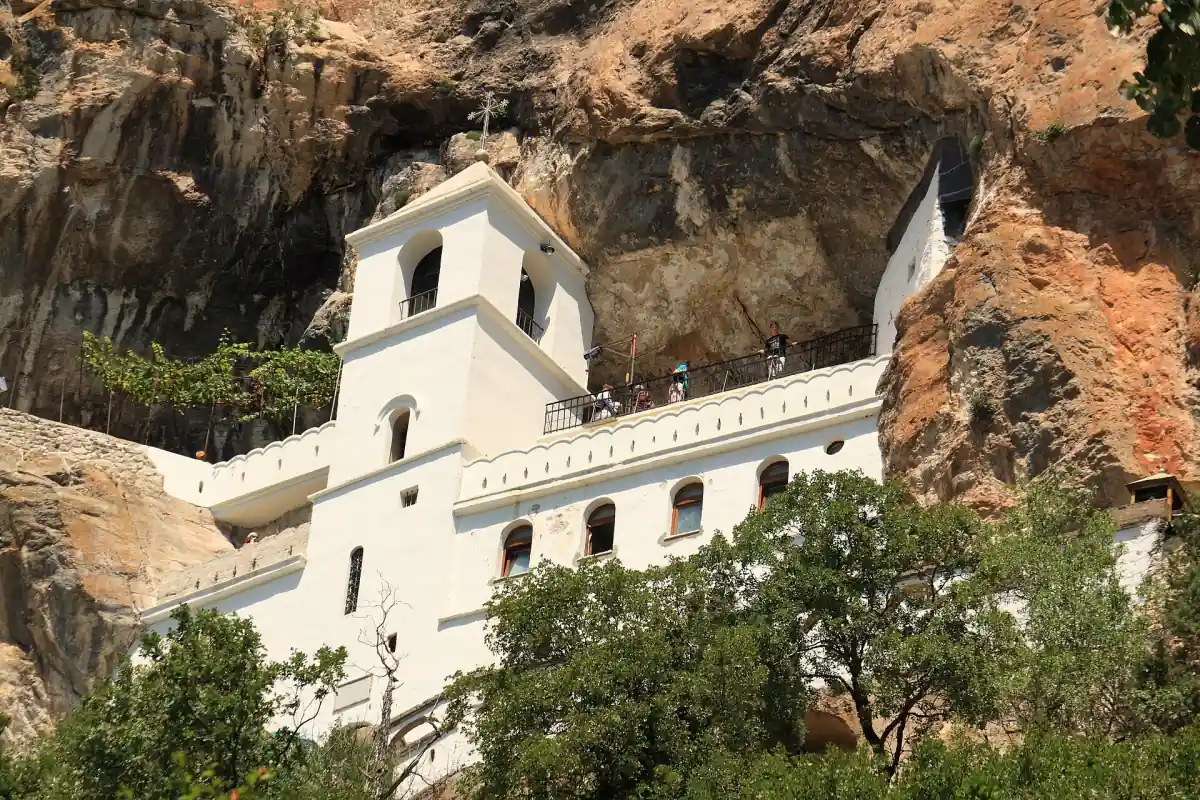
Ostrog stands against the Ostroška Greda cliff above the Zeta Valley. The national tourism organisation describes frescoed cave churches from the seventeenth century. Architecture here is closely connected with the mountain: religious rooms occupy the rock setting, and stairs and narrow terraces link the upper spaces. Looking at those features gives the history a physical form beyond dates and names.
The monastery's own history distinguishes the lower Holy Trinity church from the upper Vavedenje and Holy Cross churches. This account is useful when following the relationship between the lower complex and the caves above. Take it as the church's identification of its spaces, and ask for orientation during your visit rather than deciding which church a photograph shows from its facade alone.
The private monastery route on this page lasts seven hours overall and includes a licensed English-speaking tourist guide. Transport, road and parking expenses, monastery taxes, tourist tax and travel insurance are listed as included. Food and drink are extra. It suits visitors who want a guided monastery circuit with historical explanation. More formats appear on the private tours page.
Relics, religious tradition and the May feast
The monastery's biography records Basil's death at Ostrog as 12 May 1671. Keep that date within the biography's own presentation rather than converting historical calendars. The church's report for 12 May 2026 describes the celebration of Saint Basil, a liturgy on the upper plateau and pilgrims waiting at the relics. It connects the historical figure with the continuing religious life of the place.
Accounts of the relics, light and a vine form part of the monastery's religious tradition. They explain the meaning that believers attach to Ostrog and should be read as expressions of faith. Stories of miracles belong in that devotional context. A historical visit can acknowledge their importance while keeping the biography, the architectural setting and religious belief distinct.
The Mitropolia's feast report locates Basil's relics in the upper Vavedenje church. Use that church attribution when reading about veneration. If you plan to visit around a service, organise your transport around the religious visit you intend to make; the arrival guide covers the road approach separately from time spent within the monastery.
Questions about Ostrog's past
When did the monastery community develop?
The church history describes Isaija and other hermits at the beginning of the seventeenth century, followed by the community associated with Basil. The older fortified place is a separate part of the name's history.
Who was Saint Basil before his religious life?
The monastery's biography names him Stojan Jovanović, from Mrkonjići in Popovo Polje, and describes his connections with Zavala and Tvrdoš.
Is the guided trip a specialist historian tour?
The private monastery circuit includes a licensed English-speaking tourist guide. Choose it for a guided visit combining monastery stops, transport and the listed fees.